Page loading




Flyer
-

 Authors
-
Chronological
- • 1977 (1-12)
- • 1978 (13-23)
- • 1979 (24-27)
- • 1980 (28-39)
- • 1981 (40-52)
- • 1982 (53-64)
- • 1983 (65-74)
- • 1984 (75-97)
- • 1985 (98-114)
- • 1986 (115-120)
- • 1987 (121-127)
- • 1988 (128-134)
- • 1989 (-)
- • 1990 (135)
- • 1991 (136-138)
- • 1992 (139-144)
- • 1993 (145-153)
- • 1994 (154-163)
- • 1995 (164-172)
- • 1996 (173-188)
- • 1997 (189-194)
- • 1998 (195-196)
- • 1999 (197-201)
- • 2000 (202-206)
- • 2001 (207-213)
- • 2002 (214-220)
- • 2003 (221-224)
- • 2004 (225-226)
- • 2005 (227-229)
- • 2006 (230-231)
- • 2007 (232-237)
- • 2008 (238)
- • 2009 (239-247)
- • 2010 (248)
- • 2011 (249-251)
- • 2012 (252-255)
- • 2013 (256)
- • 2014 (257)
- • 2015 (-)
- • 2016 (258-260)
- • 2017 (261-263)
- • 2018 (264-269)
- • 2019 (270-273)
- • 2019 (274-276)
- • 2021 (277)
- • 2022 (278-281)
- • 2023 (282-284)
- • 2024 (285-285b)
- • 2025 (286-288)
- • 2026 (289)
-
Des barbares...
-
Biblioteratology
- • 01. Chez les brocheurs [1]
- • 02. Chez les éditeurs[1]
- • 03. Chez les relieurs [1]
- • 04. Chez les relieurs [2]
- • 05. Chez les éditeurs [2]
- • 06. At the readers [1]
- • 07. Chez les éditeurs [3]
- • 08. Chez les éditeurs [4]
- • 09. Chez les éditeurs [5]
- • 10. Chez les relieurs [3]
- • 11. At the bookstores [1]
- • 12. Among layout designers [1]
-
Entertainments
-
Fin-de-Siècle
-
Fourneau and Fornax
-
Printings
-
Typography


Fornax is an independent, artisan publishing house based in Champagne,
in the tiny village of Bannes.
For twenty-six years, it also maintained a workshop in the Île-de-France region,
in the not-so-tiny village of Paris. It no longer does.
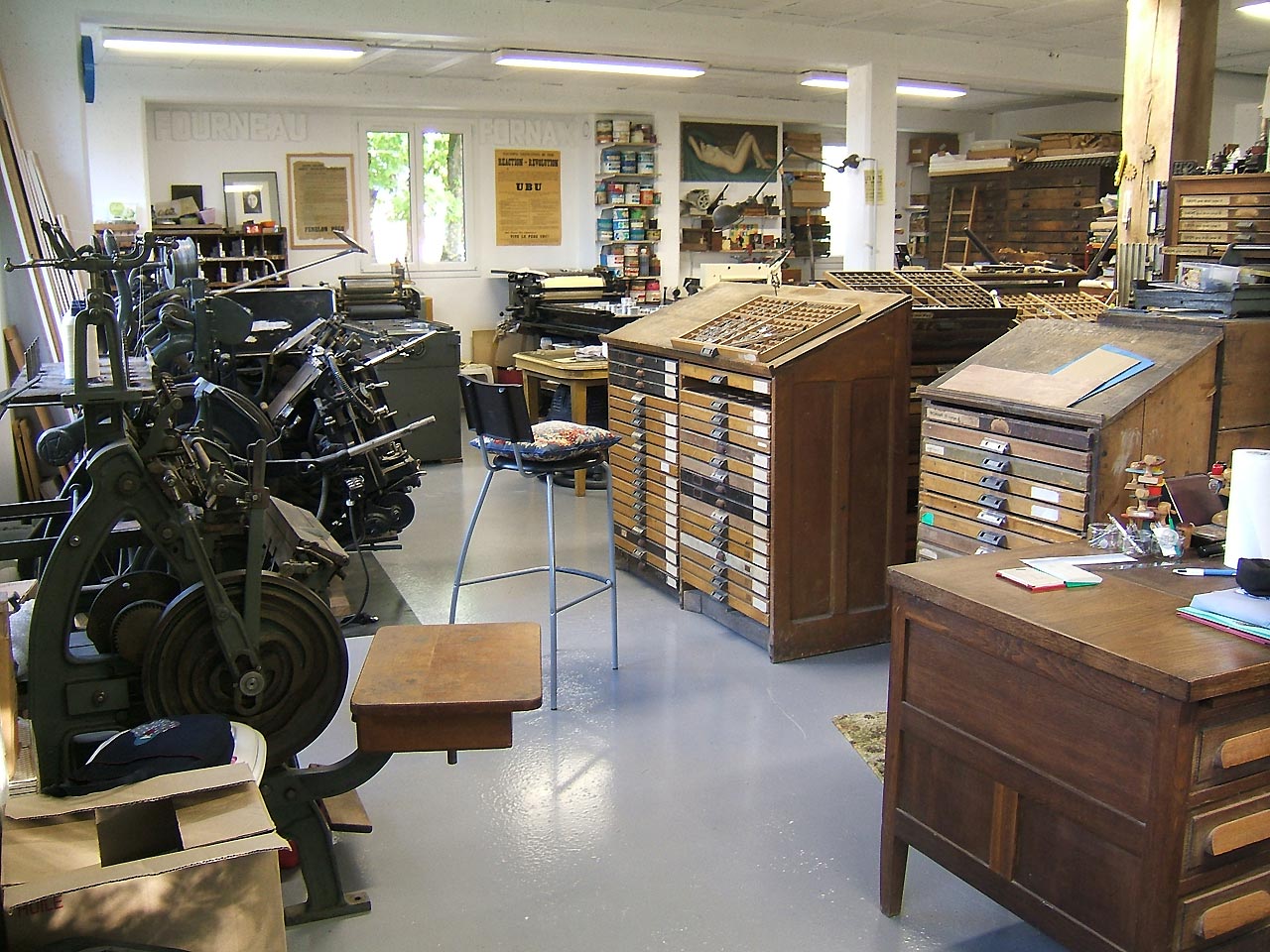
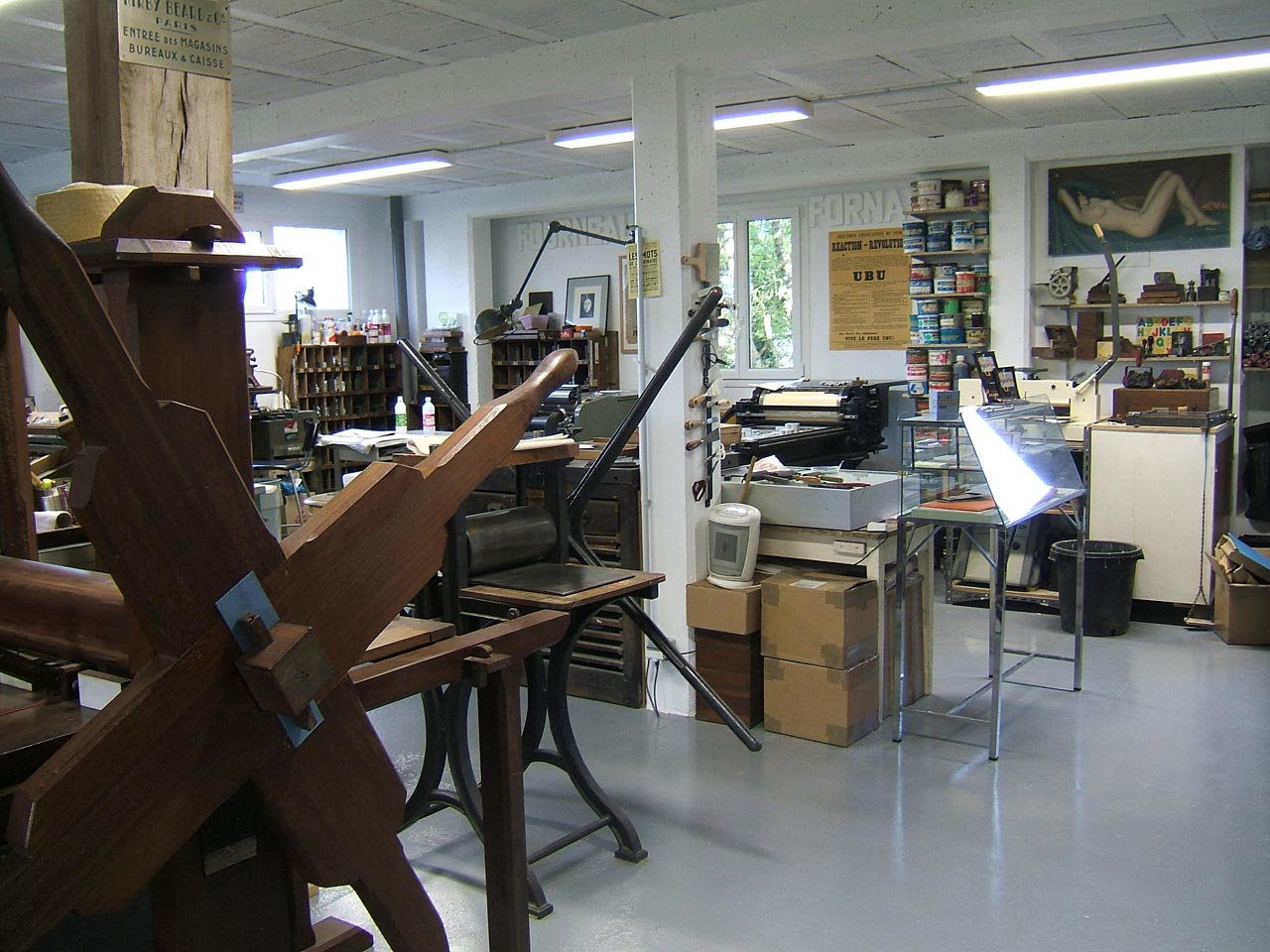
Workshop in Bannes.

You can't spend all your time cooped up in your workshop, moping around when you haven't got an idea, or working like a man possessed when you have one and are desperate to bring it to life before it vanishes into thin air — like morning dew, which has the sheer audacity to disappear at the first ray of sunshine. No. You can't spend all your time in your workshop. Sometimes you have to get out. Yesterday was one of those occasions. My bookbinding wife and I went to the Coronation City (Reims, that is) to take part in a craft fair. It was a little chilly and a little draughty in the vast building where we were welcomed, but apart from those two minor inconveniences, the day went rather well. We even met a good many pleasant, smiling people, both among the exhibitors and the visitors...
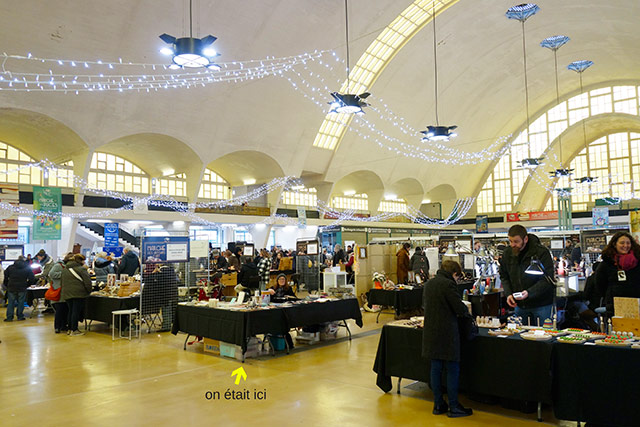
We picked a moment when our stand wasn't swarming with people to take the picture. The CLS is nowhere to be seen, since he was behind the camera.
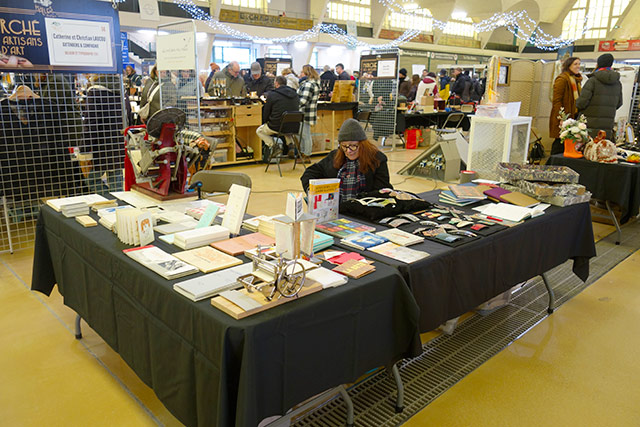
Here you can see the stand a little more closely. Right there in the foreground, tucked into the corner, stands a gigantic chrome-steel-and-brass intaglio press, and a fully functioning one at that. On the left are Fornax's books, with our little English Adana letterpress in the background, dressed from head to toe in burgundy. We had planned to put both presses to work in front of our astonished visitors, but it was simply too cold: the printing ink wouldn't have been fit for use. Ink, like us two-legged creatures, dislikes extremes of temperature. Too hot, too cold — it just won't play.
On the right table, you'll find a few examples of little books made during workshops with children; then the leather and paper jewellery by Her Ladyship the Bookbinder, Catherine Chauvel (catherinechauvel.com); and finally her notebooks for writing or drawing. The same lady, wearing her hat on her head and her coat on her back, is busy getting her portable little gilding kit ready, so she can personalise her business cards with a touch of pure gold.
But we're not here to spend the whole time talking about ourselves and gazing at our own navels (although, come to think of it...!). So, whenever old boy CLS wasn't needed at the stand to chat with passers-by and potential customers — those who pass by and those who might be tempted to buy — he would wander from stand to stand, quietly transforming himself into a passer-by who might well become a buyer, or a buyer who was merely passing by. And it was during one such stand-to-stand ramble that he suddenly came to a dead stop in front of a work of art which struck him right in the depths of his heart, with an impact as unexpected as it was genuine. Now then, dear reader-boy, beloved reader-girl, hold your breath... Here it is:
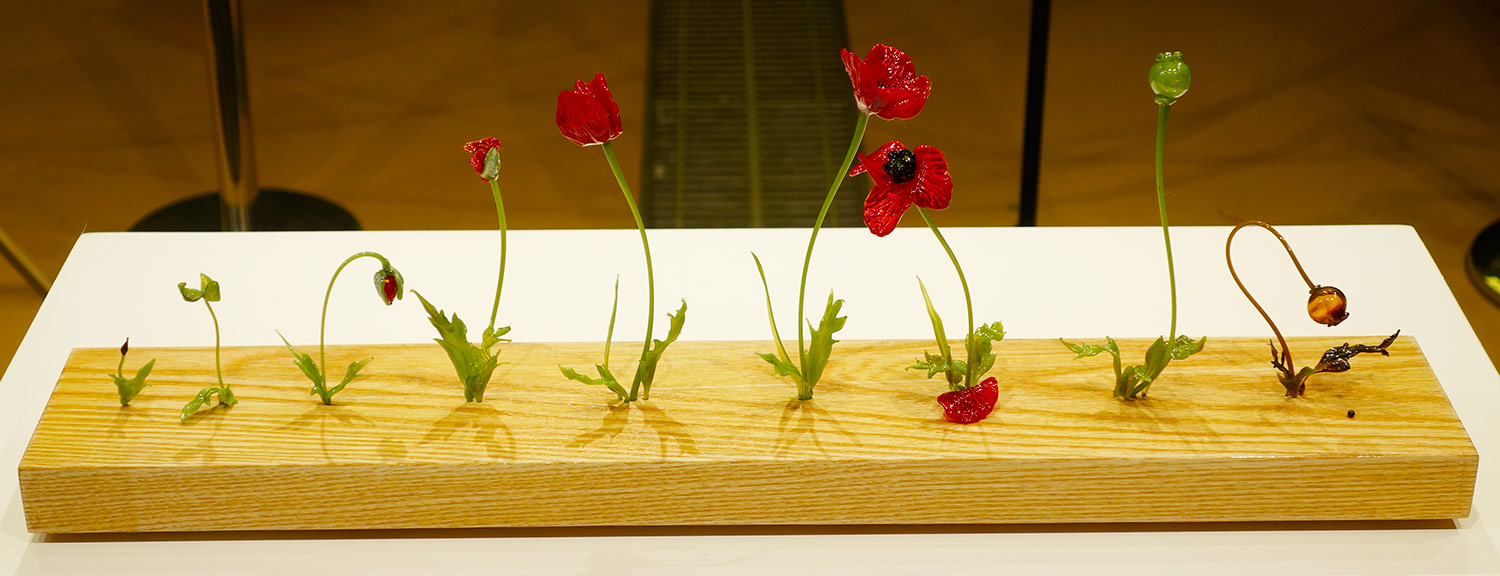
As you can see, this is a work of exquisite delicacy, made of spun glass. Reading from left to right (our preferred direction, naturally), it tells the story of a poppy: its birth, its life and its death. If you find the picture a little too small, you're perfectly entitled to click on it and make it spring into a larger version. The CLS was deeply moved. He immediately set about finding out who had created this little masterpiece, so fine and fragile — qualities which, as it happens, were very much in keeping with the subject she had chosen to capture.
Her name is Céline Lambert, and her studio is called l'Atelier d'Ange (Angel's Workshop). It is located in the large village of Ambonnay, west of Épernay, a place better known for its still red wine than for its glass-spinning artisans. That red wine, incidentally, is, in the CLS's humble opinion, rather overpriced for what it is. But please don't repeat this personal opinion to the local folk. They might come round to my house and disembowel me for the heinous crime of lèse-majesté against Bacchus.
Céline Lambert and I — the CLS himself — got talking, and discovered that we shared a wonderful love of poppies (you might like to read this post while listening to Comme un p'tit coquelicot, as sung by Mouloudji, listen →here). We agreed, Céline on her side and me on mine, that the poppy was our favourite flower. I don't know her reasons, but I know mine: its dazzling red, which snaps and flutters like a revolutionary banner; the sheer grandeur of its corolla, perched high atop its slender stem, whose colour is the exact complement of its four petals; its little black heart, shaped like half an hourglass; its free-spirited determination to grow wherever it pleases; and its absolute resistance to being picked, since the moment you pluck it, it wilts within half an hour… To live wherever you have chosen to live — or die! That is its motto.
Céline kindly gave me permission to photograph her beside her work, which she has christened The Imprint of a Breath. And so I did.
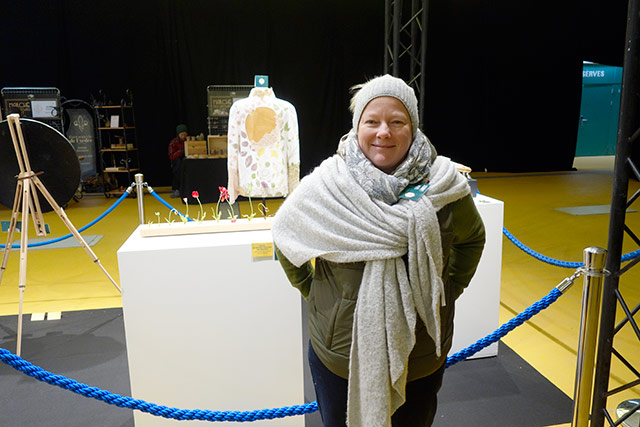
The regular readers of this website already know that poppies hold a special place in my heart. They know that, back in 1984, I printed a little book on poppy petals (see →here). Thirty copies, made from eight petals (two poppies, in other words). It was my bestseller of the summer of 1984 — or rather, of the autumn, since I had to wait for the petals to dry between the pages of my copy of Littré's French dictionary before I could finish making the edition. What my dear readers don't know yet is that, as soon as I had completed all thirty copies, I packed them into my little suitcase and set off for Paris, where I embarked on a tour of bookshops. Every bookseller I visited admired the little book. Every single one bought a copy. And every single one told me: "You know, I'm buying your Poppy for myself. I'm not going to sell it." Which means that this little Poppy never found any readers other than booksellers...
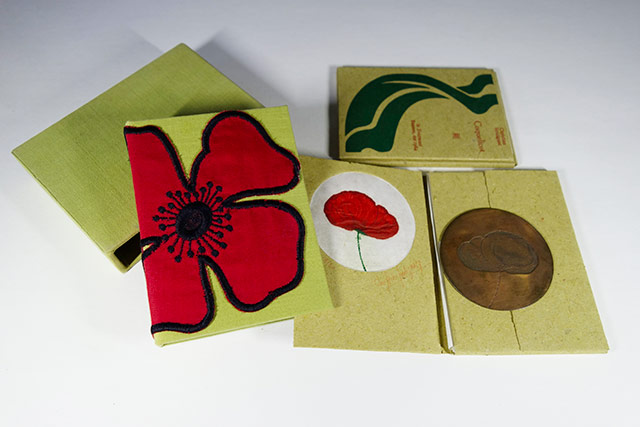
The two copies in my personal collection, together with the plate used to print the frontispiece and the box I made at the time to protect them.
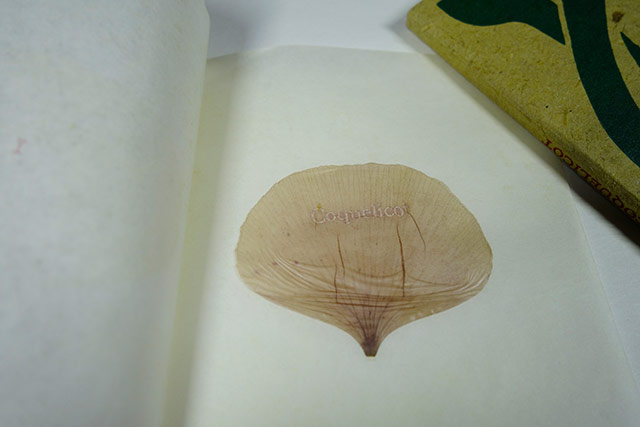
The title petal from one of the two copies.
Quite a few years later, in 2001, I published the poem Scheherazade (see →here) by my friend Jean-Hugues Malineau, who had the very bad taste to die some time ago, leaving all his still-living friends behind here on Earth. In the poem, he addresses a little girl and tells her about poppies. I illustrated his poem with four linocuts. Here is the last of them:
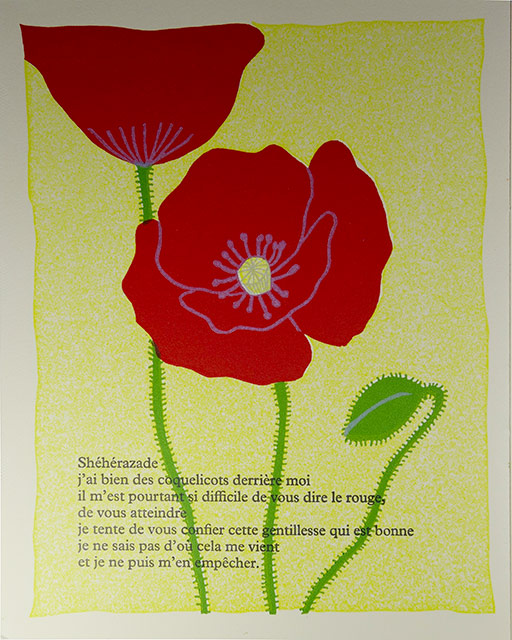
The poppy was also Jean-Hugues Malineau's favourite flower...
You can't spend all your time cooped up in your workshop, moping around when you haven't got an idea, or working like a man possessed when you have one and are desperate to bring it to life before it vanishes into thin air — like morning dew, which has the sheer audacity to disappear at the first ray of sunshine. No. You can't spend all your time in your workshop. Sometimes you have to get out. Yesterday was one of those occasions. My bookbinding wife and I went to the Coronation City (Reims, that is) to take part in a craft fair. It was a little chilly and a little draughty in the vast building where we were welcomed, but apart from those two minor inconveniences, the day went rather well. We even met a good many pleasant, smiling people, both among the exhibitors and the visitors...
We picked a moment when our stand wasn't swarming with people to take the picture. The CLS is nowhere to be seen, since he was behind the camera.
Here you can see the stand a little more closely. Right there in the foreground, tucked into the corner, stands a gigantic chrome-steel-and-brass intaglio press, and a fully functioning one at that. On the left are Fornax's books, with our little English Adana letterpress in the background, dressed from head to toe in burgundy. We had planned to put both presses to work in front of our astonished visitors, but it was simply too cold: the printing ink wouldn't have been fit for use. Ink, like us two-legged creatures, dislikes extremes of temperature. Too hot, too cold — it just won't play.
On the right table, you'll find a few examples of little books made during workshops with children; then the leather and paper jewellery by Her Ladyship the Bookbinder, Catherine Chauvel (catherinechauvel.com); and finally her notebooks for writing or drawing. The same lady, wearing her hat on her head and her coat on her back, is busy getting her portable little gilding kit ready, so she can personalise her business cards with a touch of pure gold.
But we're not here to spend the whole time talking about ourselves and gazing at our own navels (although, come to think of it...!). So, whenever old boy CLS wasn't needed at the stand to chat with passers-by and potential customers — those who pass by and those who might be tempted to buy — he would wander from stand to stand, quietly transforming himself into a passer-by who might well become a buyer, or a buyer who was merely passing by. And it was during one such stand-to-stand ramble that he suddenly came to a dead stop in front of a work of art which struck him right in the depths of his heart, with an impact as unexpected as it was genuine. Now then, dear reader-boy, beloved reader-girl, hold your breath... Here it is:
As you can see, this is a work of exquisite delicacy, made of spun glass. Reading from left to right (our preferred direction, naturally), it tells the story of a poppy: its birth, its life and its death. If you find the picture a little too small, you're perfectly entitled to click on it and make it spring into a larger version. The CLS was deeply moved. He immediately set about finding out who had created this little masterpiece, so fine and fragile — qualities which, as it happens, were very much in keeping with the subject she had chosen to capture.
Her name is Céline Lambert, and her studio is called l'Atelier d'Ange (Angel's Workshop). It is located in the large village of Ambonnay, west of Épernay, a place better known for its still red wine than for its glass-spinning artisans. That red wine, incidentally, is, in the CLS's humble opinion, rather overpriced for what it is. But please don't repeat this personal opinion to the local folk. They might come round to my house and disembowel me for the heinous crime of lèse-majesté against Bacchus.
Céline Lambert and I — the CLS himself — got talking, and discovered that we shared a wonderful love of poppies (you might like to read this post while listening to Comme un p'tit coquelicot, as sung by Mouloudji, listen →here). We agreed, Céline on her side and me on mine, that the poppy was our favourite flower. I don't know her reasons, but I know mine: its dazzling red, which snaps and flutters like a revolutionary banner; the sheer grandeur of its corolla, perched high atop its slender stem, whose colour is the exact complement of its four petals; its little black heart, shaped like half an hourglass; its free-spirited determination to grow wherever it pleases; and its absolute resistance to being picked, since the moment you pluck it, it wilts within half an hour… To live wherever you have chosen to live — or die! That is its motto.
Céline kindly gave me permission to photograph her beside her work, which she has christened The Imprint of a Breath. And so I did.
The regular readers of this website already know that poppies hold a special place in my heart. They know that, back in 1984, I printed a little book on poppy petals (see →here). Thirty copies, made from eight petals (two poppies, in other words). It was my bestseller of the summer of 1984 — or rather, of the autumn, since I had to wait for the petals to dry between the pages of my copy of Littré's French dictionary before I could finish making the edition. What my dear readers don't know yet is that, as soon as I had completed all thirty copies, I packed them into my little suitcase and set off for Paris, where I embarked on a tour of bookshops. Every bookseller I visited admired the little book. Every single one bought a copy. And every single one told me: "You know, I'm buying your Poppy for myself. I'm not going to sell it." Which means that this little Poppy never found any readers other than booksellers...
The two copies in my personal collection, together with the plate used to print the frontispiece and the box I made at the time to protect them.
The title petal from one of the two copies.
Quite a few years later, in 2001, I published the poem Scheherazade (see →here) by my friend Jean-Hugues Malineau, who had the very bad taste to die some time ago, leaving all his still-living friends behind here on Earth. In the poem, he addresses a little girl and tells her about poppies. I illustrated his poem with four linocuts. Here is the last of them:
The poppy was also Jean-Hugues Malineau's favourite flower...
I mentioned here a little while ago a practice that was still perfectly legal in the early twentieth century, though it most certainly isn't today…
— Oh, here we go. He's going to bore us with his life story again!
— Hey! Have I asked for your opinion?
— No, but seeing as you're going to do exactly as you please anyway…
— Quite right. Now, shoo! Off with you, you feathered nuisances!
— That's no way to talk to people…
— You're welcome to stay, if you like, but don't come cluttering up the place with your pointless chatter…
— Hmmm…
So, I was talking about our grandparents, who used to get themselves a little high on wine in which coca leaves had been steeping. It perked them up, or so they said. And they weren't wrong. Coca does perk you up…
— And then some, I imagine. Was this little pick-me-up actually legal?
— Of course it was. It was a thriving home-grown industry, no less. Sold in pharmacies… Anyone could buy it…
— Buy what, exactly?
— Mariani wine, made with coca from Peru…
— That was its name?
— Yes, after the man who invented this miracle potion: Angelo Mariani.
— Ha! That's rich… The fellow was drugging people and his name was Angelo. A proper little angel, then. I would have called him Demonino, myself. A man who drugs people ought not to be called Angelo… He was marketing two drugs at once, your angel: wine — probably adulterated, too (every little extra helps), although wine is perfectly legal in France — and, on top of that, coca. Well done, him!
— He thought he was doing a good thing…
— That's no excuse. And, naturally, your fellow made a fortune out of it…
— Well, yes. Business was booming. Would you like to see what he looked like?
— Why not…

Portrait of Angelo Mariani, wood engraving by Charles Clément, 1911.
— … Right. He certainly knew how to look innocent. A thoroughly harmless-looking old grandfather with a white beard and that ridiculous little hat perched on his head. You could almost imagine him passing the collection plate after Sunday Mass…
— You go to Mass, do you?
— No, it's just an expression. Anyway, you say he was rolling in money?
— Oh, yes. Mariani wine was doing remarkably well. And he was quite a genius when it came to publicity…
— Really?
— Indeed. He used to send cases of his coca wine to all sorts of celebrities of the day, and in return he received handsome handwritten letters singing the praises of his tonic wine…
— … Well, you can bet it was tonic, all right…
— … Then he would publish their autographs in newspapers and in beautifully bound albums, complete with wood-engraved portraits of the celebrities in question…
— … Hang on, I think I've got it. Seeing all those celebrities guzzling Mariani wine in the newspapers, ordinary folk like us — the social rejects, the down-at-heel, the poor devils who can't afford a decent smoke — would think: “Well, why shouldn't we?” And they'd scrimp and save to get their hands on the miracle drink…
— Yes, more or less…
— But surely there were at least a few celebrities of the day who refused to play along?
— Not many. Angelo cast his net pretty wide. Every walk of life. Doctors, artists, writers, sportsmen…
— … Well, drugs and sportsmen. Hardly a surprising combination…
— … Military men, politicians… even crowned heads…
— Good Lord! Surely not the clergy as well?
— I'm afraid so. There were even three popes…
— Three?
— Yes. Leo XIII, Pius X and Benedict XV… Not to mention a whole host of kings and queens, from Europe and elsewhere, and members of both the old aristocracy and the nobility of the Empire…
— Ah, yes. The cream of the crop, and the cream of the Empire… But you mentioned politicians. Presidents, surely not?
— Oh, yes. Six French Presidents of the Republic, plus one American President thrown in for good measure…
— Well, I'll be damned. Although, when you think about it, perhaps it's not so surprising after all. If you're going to hold the reins of government, you need to keep your body going… and your spirits up. And what about your old friends at the Mercure de France? Your darling Rachilde?
— She was in there…
— And her husband Vallette?
— Him too. That's rather more surprising, given how level-headed and industrious he was…
— Well, too much hard work sometimes calls for a little physical assistance. And Jarry?
— Oh, no! He was an absinthe man. Mind you, Jean Lorrain was a Mariani wine drinker too, despite his preference for ether… So that doesn't prove much. One must learn to vary one's pleasures…
— Had to learn to vary one's pleasures, you mean. Because nowadays all those delightful little indulgences are forbidden… or so I believe.
— Yes…
— And have you got any more of these Mariani-fied celebrities?
— Loads of them… Take the most beloved military man in French history, the man who did such a splendid job of looking after France in the 1940s: our good old Marshal Pétain… Among explorers, Count Savorgnan de Brazza, who conquered a good chunk of Africa for our glorious country… Among inventors, Thomas Edison, who stole the limelight from our own dear Charles Cros with his phonograph and fought tooth and nail for direct current in his own little country… Among second-rate men of letters, Maurice Leblanc…
— Yes, but Arsène Lupin was the one who led him astray…
— … And Jules Verne, and Willy…
— Yes, but in his case it was probably Colette's departure that drove him to despair and drugs. But surely not Zola?
— Oh, yes! Even Zola! You really can't trust anyone these days… All of them druggies, every last one of them, I'm telling you! And we're supposed to be happy being governed by that sort of crowd… Pfff…
— You've got a point there. Pfff, indeed! But tell me, how on earth do you know all this?
— Well, because I own the complete set of the Albums Mariani…
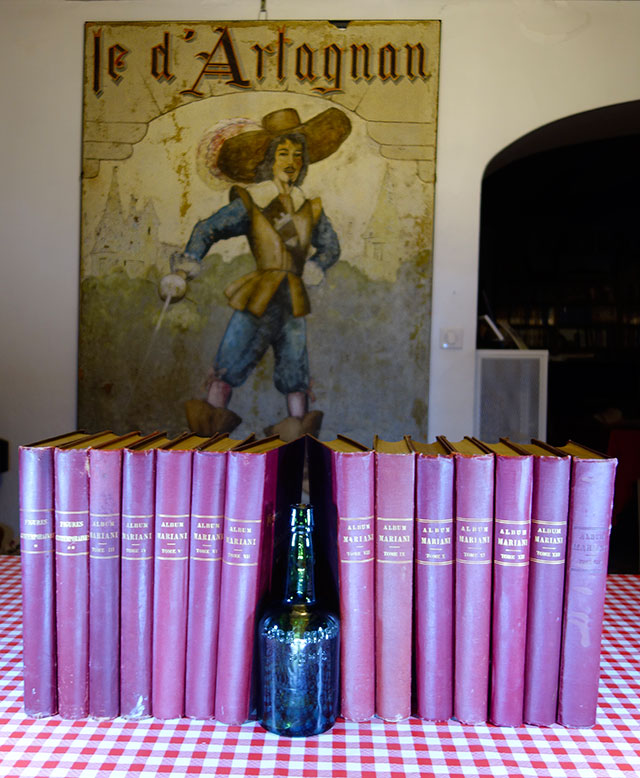
Complete collection of the Albums Mariani.
— Oh, right… You've got the whole lot, have you? And what about your d'Artagnan back there? Was he on the stuff too?
— No, Mariani wine hadn't been invented in his day… Although he might well have tried it if the wine had come from Bordeaux. He was a Gascon, you know…
— And what's that bottle doing in the middle of all those books?
— Oh, that's a bottle of Mariani wine…
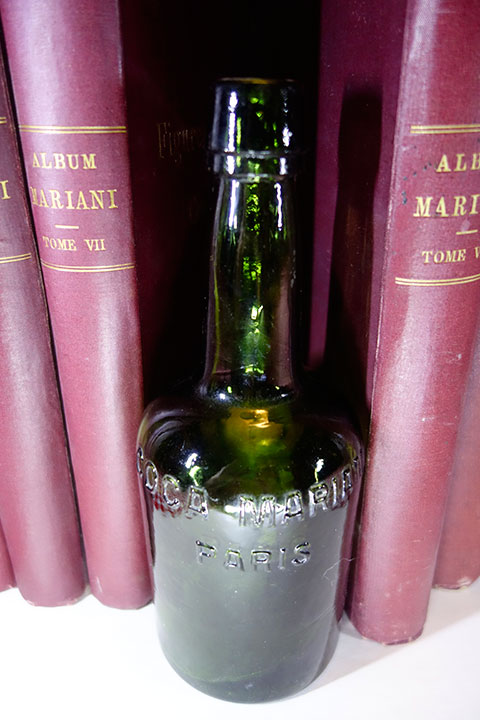
The Mariani wine bottle.
— Oh, I see. So you, too, have been…
— Absolutely not! I found the bottle empty, I'm afraid. A great pity, really… because the odd little experiment here and there is always worth considering…
— You're serious?
— Not remotely. But just look at those lovely raised inscriptions on the bottle. Rather splendid, aren't they?
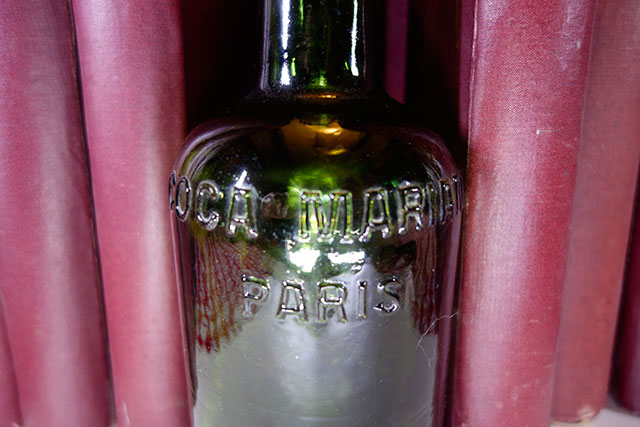
Close-up of the embossed lettering.
— The trouble is, I acquired the bottle just as it is, without its label. With the label still on, it must have been quite a sight…
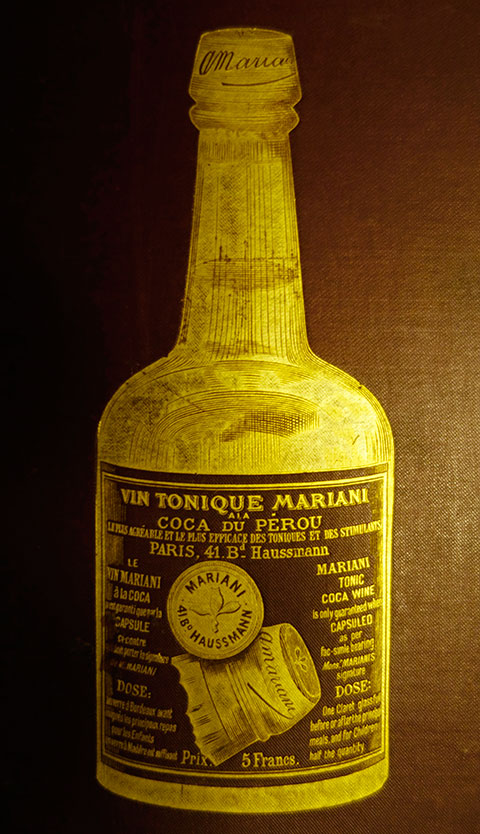
The gilt illustration of the bottle on the back cover of an Album Mariani.
— Well… if that's your sort of thing, I won't stand in your way…
— Here. Since you've been — for once — not entirely unbearable, I'm going to give you a little present…
— Oh!…
— … The complete list of celebrities who were hooked on Mariani wine. There are 1,095 of them…
— Thank you. You really shouldn't have. That's awfully kind of you…
— Don't thank me. Just have a browse through it… You'll find it enlightening…
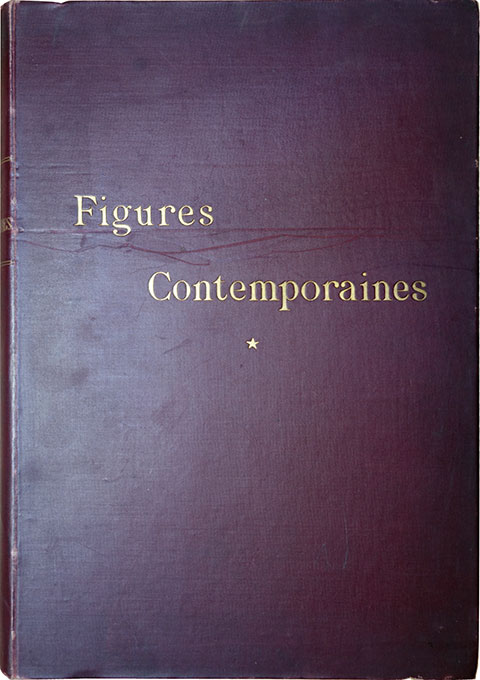
I mentioned here a little while ago a practice that was still perfectly legal in the early twentieth century, though it most certainly isn't today…
— Oh, here we go. He's going to bore us with his life story again!
— Hey! Have I asked for your opinion?
— No, but seeing as you're going to do exactly as you please anyway…
— Quite right. Now, shoo! Off with you, you feathered nuisances!
— That's no way to talk to people…
— You're welcome to stay, if you like, but don't come cluttering up the place with your pointless chatter…
— Hmmm…
So, I was talking about our grandparents, who used to get themselves a little high on wine in which coca leaves had been steeping. It perked them up, or so they said. And they weren't wrong. Coca does perk you up…
— And then some, I imagine. Was this little pick-me-up actually legal?
— Of course it was. It was a thriving home-grown industry, no less. Sold in pharmacies… Anyone could buy it…
— Buy what, exactly?
— Mariani wine, made with coca from Peru…
— That was its name?
— Yes, after the man who invented this miracle potion: Angelo Mariani.
— Ha! That's rich… The fellow was drugging people and his name was Angelo. A proper little angel, then. I would have called him Demonino, myself. A man who drugs people ought not to be called Angelo… He was marketing two drugs at once, your angel: wine — probably adulterated, too (every little extra helps), although wine is perfectly legal in France — and, on top of that, coca. Well done, him!
— He thought he was doing a good thing…
— That's no excuse. And, naturally, your fellow made a fortune out of it…
— Well, yes. Business was booming. Would you like to see what he looked like?
— Why not…
Portrait of Angelo Mariani, wood engraving by Charles Clément, 1911.
— … Right. He certainly knew how to look innocent. A thoroughly harmless-looking old grandfather with a white beard and that ridiculous little hat perched on his head. You could almost imagine him passing the collection plate after Sunday Mass…
— You go to Mass, do you?
— No, it's just an expression. Anyway, you say he was rolling in money?
— Oh, yes. Mariani wine was doing remarkably well. And he was quite a genius when it came to publicity…
— Really?
— Indeed. He used to send cases of his coca wine to all sorts of celebrities of the day, and in return he received handsome handwritten letters singing the praises of his tonic wine…
— … Well, you can bet it was tonic, all right…
— … Then he would publish their autographs in newspapers and in beautifully bound albums, complete with wood-engraved portraits of the celebrities in question…
— … Hang on, I think I've got it. Seeing all those celebrities guzzling Mariani wine in the newspapers, ordinary folk like us — the social rejects, the down-at-heel, the poor devils who can't afford a decent smoke — would think: “Well, why shouldn't we?” And they'd scrimp and save to get their hands on the miracle drink…
— Yes, more or less…
— But surely there were at least a few celebrities of the day who refused to play along?
— Not many. Angelo cast his net pretty wide. Every walk of life. Doctors, artists, writers, sportsmen…
— … Well, drugs and sportsmen. Hardly a surprising combination…
— … Military men, politicians… even crowned heads…
— Good Lord! Surely not the clergy as well?
— I'm afraid so. There were even three popes…
— Three?
— Yes. Leo XIII, Pius X and Benedict XV… Not to mention a whole host of kings and queens, from Europe and elsewhere, and members of both the old aristocracy and the nobility of the Empire…
— Ah, yes. The cream of the crop, and the cream of the Empire… But you mentioned politicians. Presidents, surely not?
— Oh, yes. Six French Presidents of the Republic, plus one American President thrown in for good measure…
— Well, I'll be damned. Although, when you think about it, perhaps it's not so surprising after all. If you're going to hold the reins of government, you need to keep your body going… and your spirits up. And what about your old friends at the Mercure de France? Your darling Rachilde?
— She was in there…
— And her husband Vallette?
— Him too. That's rather more surprising, given how level-headed and industrious he was…
— Well, too much hard work sometimes calls for a little physical assistance. And Jarry?
— Oh, no! He was an absinthe man. Mind you, Jean Lorrain was a Mariani wine drinker too, despite his preference for ether… So that doesn't prove much. One must learn to vary one's pleasures…
— Had to learn to vary one's pleasures, you mean. Because nowadays all those delightful little indulgences are forbidden… or so I believe.
— Yes…
— And have you got any more of these Mariani-fied celebrities?
— Loads of them… Take the most beloved military man in French history, the man who did such a splendid job of looking after France in the 1940s: our good old Marshal Pétain… Among explorers, Count Savorgnan de Brazza, who conquered a good chunk of Africa for our glorious country… Among inventors, Thomas Edison, who stole the limelight from our own dear Charles Cros with his phonograph and fought tooth and nail for direct current in his own little country… Among second-rate men of letters, Maurice Leblanc…
— Yes, but Arsène Lupin was the one who led him astray…
— … And Jules Verne, and Willy…
— Yes, but in his case it was probably Colette's departure that drove him to despair and drugs. But surely not Zola?
— Oh, yes! Even Zola! You really can't trust anyone these days… All of them druggies, every last one of them, I'm telling you! And we're supposed to be happy being governed by that sort of crowd… Pfff…
— You've got a point there. Pfff, indeed! But tell me, how on earth do you know all this?
— Well, because I own the complete set of the Albums Mariani…
Complete collection of the Albums Mariani.
— Oh, right… You've got the whole lot, have you? And what about your d'Artagnan back there? Was he on the stuff too?
— No, Mariani wine hadn't been invented in his day… Although he might well have tried it if the wine had come from Bordeaux. He was a Gascon, you know…
— And what's that bottle doing in the middle of all those books?
— Oh, that's a bottle of Mariani wine…
The Mariani wine bottle.
— Oh, I see. So you, too, have been…
— Absolutely not! I found the bottle empty, I'm afraid. A great pity, really… because the odd little experiment here and there is always worth considering…
— You're serious?
— Not remotely. But just look at those lovely raised inscriptions on the bottle. Rather splendid, aren't they?
Close-up of the embossed lettering.
— The trouble is, I acquired the bottle just as it is, without its label. With the label still on, it must have been quite a sight…
The gilt illustration of the bottle on the back cover of an Album Mariani.
— Well… if that's your sort of thing, I won't stand in your way…
— Here. Since you've been — for once — not entirely unbearable, I'm going to give you a little present…
— Oh!…
— … The complete list of celebrities who were hooked on Mariani wine. There are 1,095 of them…
— Thank you. You really shouldn't have. That's awfully kind of you…
— Don't thank me. Just have a browse through it… You'll find it enlightening…

L’homme au coin
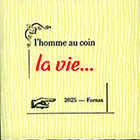
10 pages,
format 8,5 x 8,5 cm.
tirage à environ 30 exemplaires en typographie au plomb.
Thomas Braun
des fromages
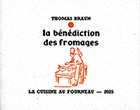
8 pages,
format 11,2 x 9 cm.
tirage à 131 exemplaires en typographie.
CLS
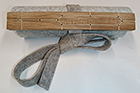
Un volumen,
79 cm de long, 17,5 cm de haut.
tirage à 10 exemplaires en linogravure.
Marie-Rose de France
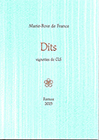
26 petits textes en proses poétique. Vignettes de CLS.
tirage à 120 exemplaires en typographie au plomb.
Marie-Rose de France
|
|
36 p., format 10 x 14 cm. composé et imprimé en typographie au plomb Tirage à 120 exemplaires. (cliquer sur l'image pour en savoir plus) |
... for those who are too lazy to seek.
15146672 visitors
546 visitors online
Fornax éditeur 18, route de Coizard, F51230 Bannes – France

